Fireworks4 min readNov 4, 2026
Why Fireworks Hit Dogs Harder Than Us
Fireworks hit dogs harder than us for three simple reasons: dogs hear a much wider range of sound than people do, many dogs are naturally wary of sudden noise, and a fireworks show gives them no warning, no explanation and no way to make it stop. For a large share of dogs, that adds up to real fear. The good news is that a little planning makes a big difference.
How much more can dogs hear than people?
A lot more at the top end. According to the LSU School of Veterinary Medicine, dogs hear from roughly 67 Hz up to about 45 kHz, while people hear from roughly 64 Hz up to about 23 kHz. The low end is similar. The difference is the high end, where a dog keeps hearing long after we have stopped.
That matters on fireworks night. A firework is not one sound. It is a whistle on the way up, a crack or boom when it bursts, crackle and fizz as it burns out, and often car alarms and barking neighbours afterwards. Some of the high-pitched parts of that mix are easy for us to ignore, or we can't hear them at all. Your dog hears them clearly, in a room that seems quiet to you.
Why are sudden bangs so hard for dogs?
Dogs read the world through sound. A sudden, loud, unfamiliar noise is exactly the kind of signal an animal's body treats as a possible threat: the heart rate goes up, the muscles get ready to move, and the dog looks for somewhere safe. With a single bang, that alarm fades quickly. With fireworks, the bangs keep coming at random intervals, sometimes for hours, and from directions the dog can't predict.
We know what the noise is. We know it is someone's celebration and that it will end. Your dog has none of that context. From their point of view the world has become loud and unpredictable for no reason, and there is nothing they can do to fix it. That loss of control is a big part of why fireworks night can be so hard.
How common is fear of fireworks in dogs?
Very common. A University of Helsinki team studied survey data on about 13,700 pet dogs and found that noise sensitivity was the most common anxiety trait, seen in 32% of dogs. Around 26% were afraid of fireworks specifically (Salonen et al., Scientific Reports, 2020). Other studies have put the share of noise-sensitive dogs anywhere between 20% and 50%.
In the UK, a 2005 RSPCA survey found that 49% of dogs showed some fear of fireworks, thunder or gunshots (Vet Times). Put simply, if your dog struggles on July 4th or New Year's Eve, you are far from alone.

Does breed make a difference?
It seems to. A Norwegian study of 5,257 dogs across 17 breeds found large differences in how sensitive each breed was to noise (AVSAB summary). That doesn't mean every dog of a sensitive breed will be afraid, or that a dog from a calmer breed won't be. Individual history matters too: early experiences, past frights and general temperament all play a part.
The practical takeaway is to watch your own dog rather than assume. Signs of noise stress include panting when it isn't hot, pacing, trembling, hiding, clinging to you, drooling, trying to escape, refusing food and barking at the sky. Some dogs go very still and quiet, which is easy to miss.
Can loud fireworks hurt a dog's hearing?
Fear is the main problem for most dogs, but noise exposure matters too. The American Kennel Club notes that the sharp hearing that makes dogs so good at listening also makes them more vulnerable to intense noise, and that fireworks at close range may damage their hearing.
That is one more reason to keep dogs well away from where fireworks are being set off. A backyard show, a street party or a lakeside display can put a dog much closer to the noise than a distant city show.
What actually helps on fireworks night?
No single trick works for every dog. What helps most is a plan with several layers:
- Walk early. Get the long walk and the last bathroom break done before dark.
- Make a safe space. Pick an inside room with as few windows as possible, close the curtains and add familiar bedding.
- Add steady background sound. A fan, the TV or calm music can soften sudden bangs.
- Stay close and calm. Comforting a scared dog is fine. Your relaxed presence helps.
- Secure the house. Frightened dogs can bolt. Check doors, gates and ID tags.
- Talk to your vet early if your dog's fear is severe. Some dogs need more support than home steps can give.
For the full timeline, read our New Year's Eve plan for a noise-sensitive dog.
Where does ear protection fit in?
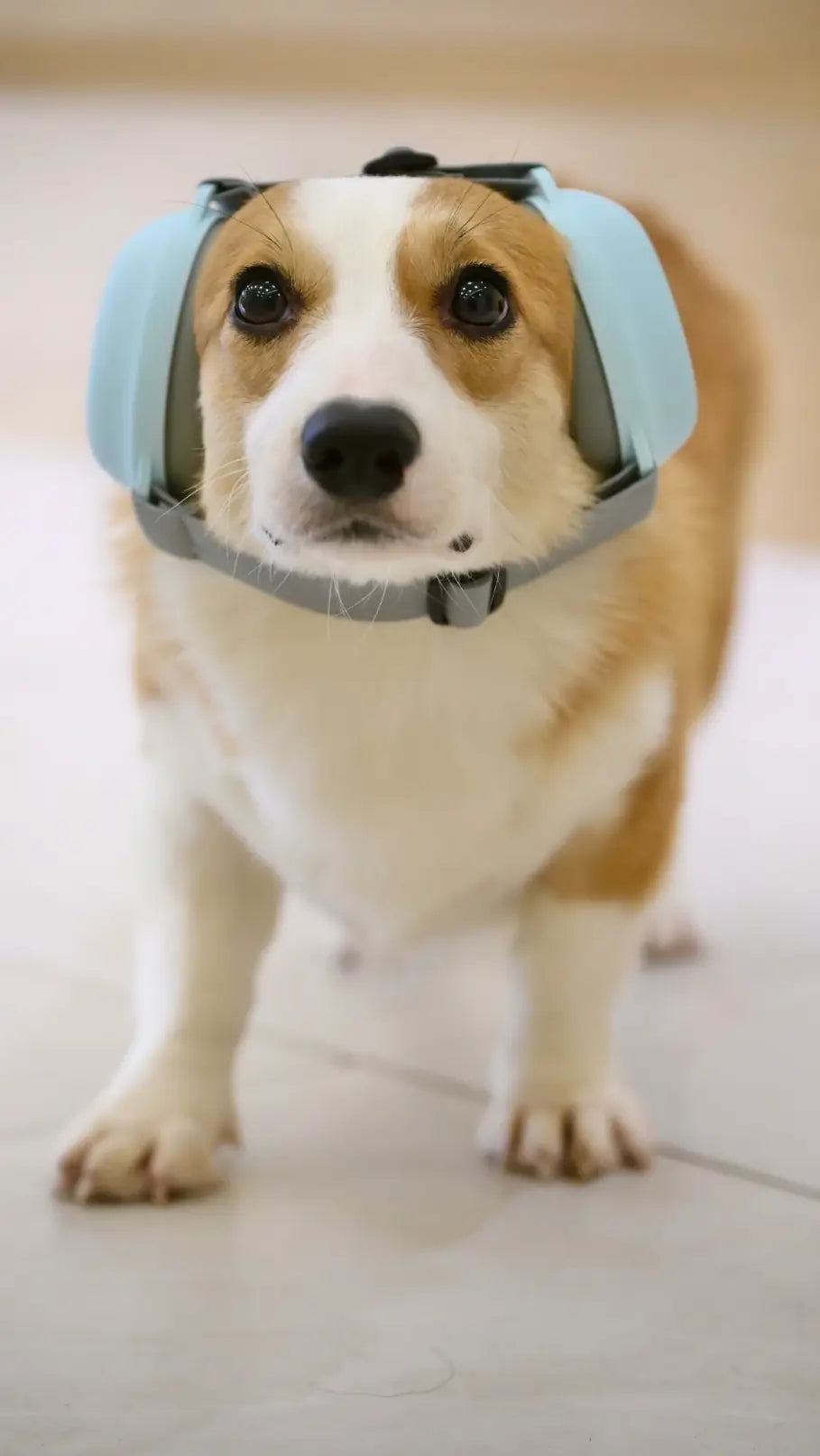
Ear protection is one of those layers. The AKC says well-fitted, noise-reducing ear muffs can offer some protection, and that they work best alongside behavior training. That matches our view: muffs are a tool, not a cure.
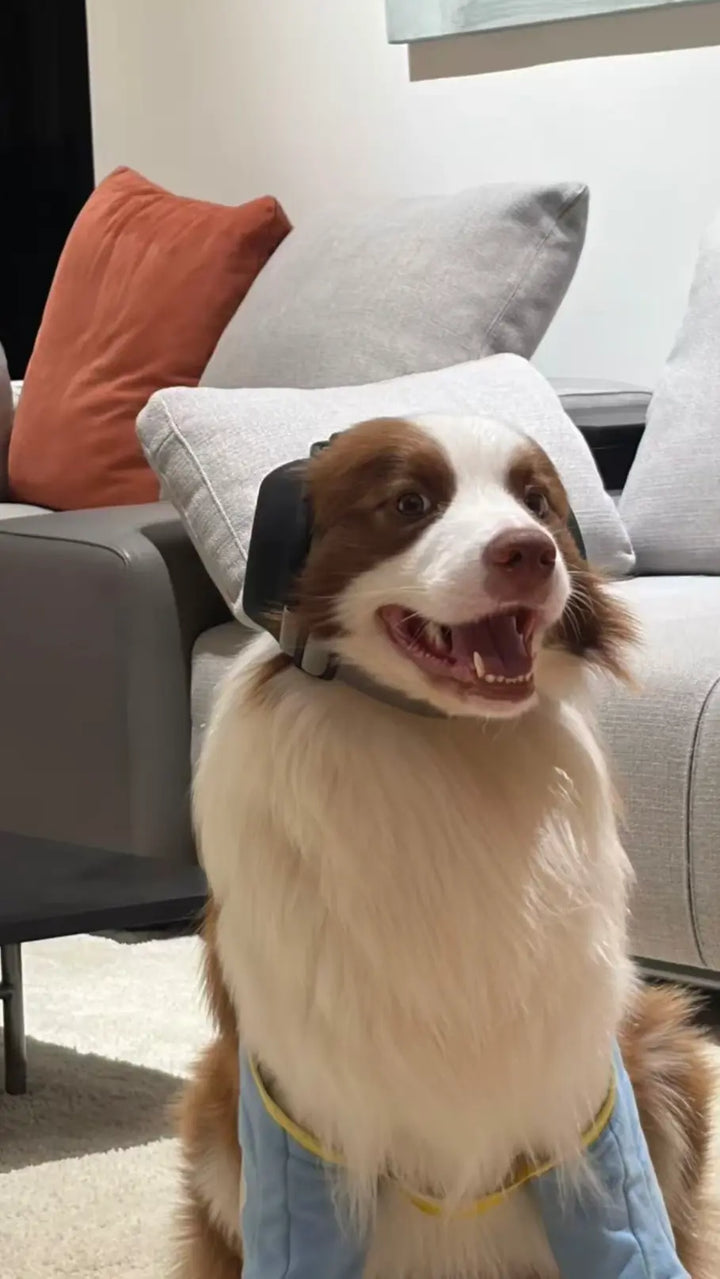
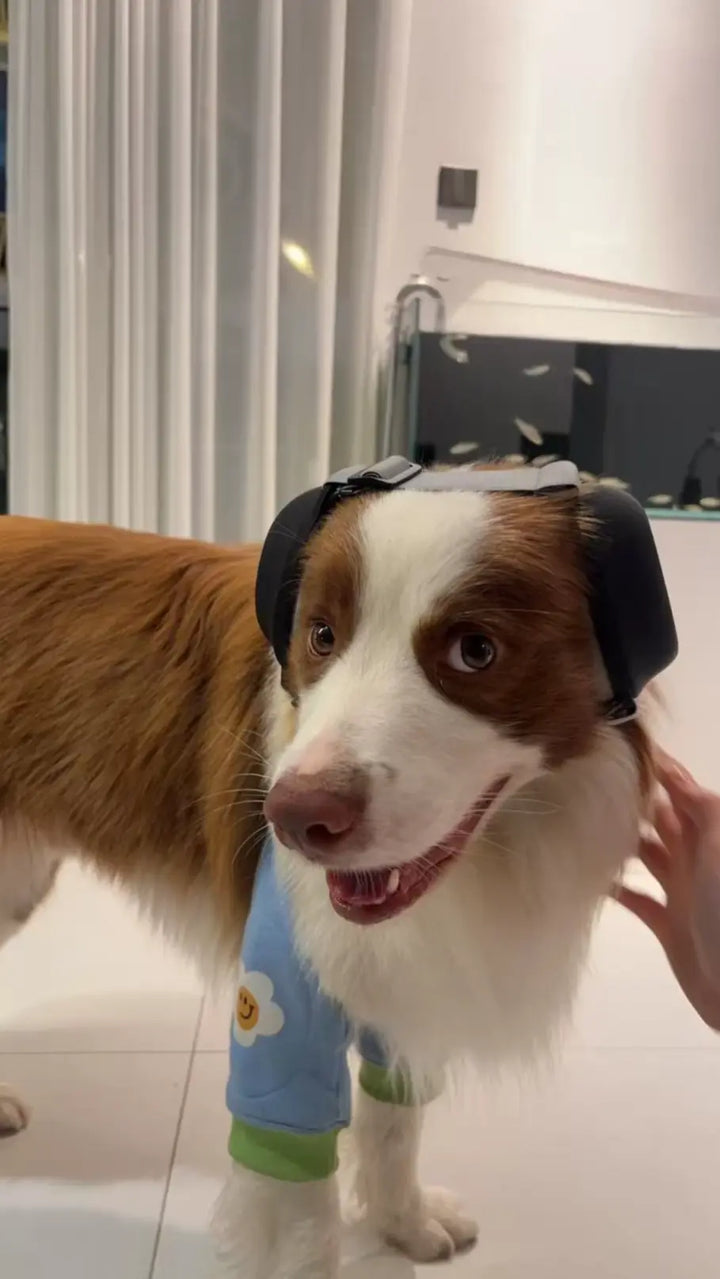
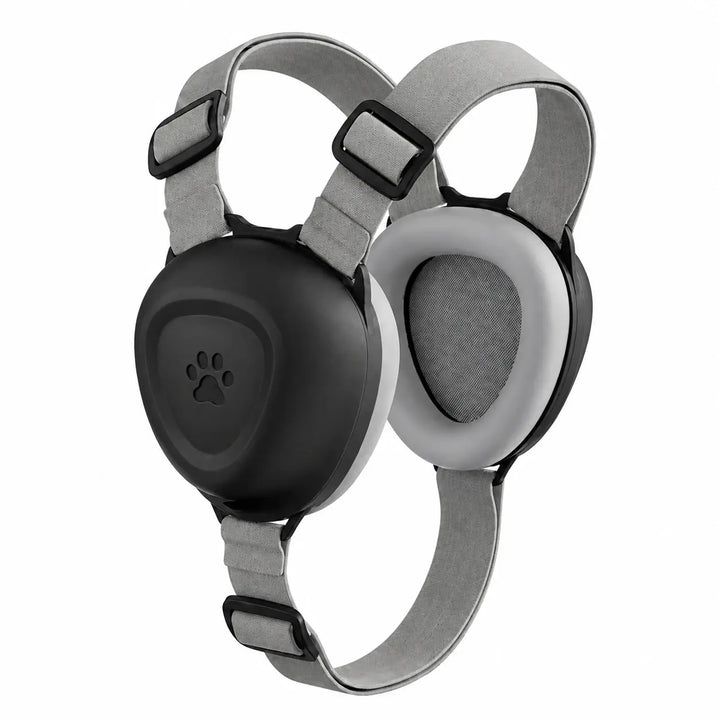
PAWSHHH is passive hearing protection for dogs, with a lab-rated SNR 29 dB* and a 3-point fit designed to help keep the cups in place. It needs no batteries. The key is getting your dog comfortable wearing it well before fireworks night, with short, positive practice sessions. Our training guide walks you through it step by step, and the size guide helps you choose Regular or Large.
Want the research in one place? Our Hearing Science page links every source.
Not veterinary advice. Talk to your vet about severe anxiety.
*Manufacturer lab rating. Real-world reduction varies with fit, head shape and coat.