Everyday noise4 min readNov 5, 2026
Thunderstorm Season: A Practical Checklist
The best way to get a noise-sensitive dog through thunderstorm season is to prepare before the first storm: set up a safe space, pack a storm kit, practice with any gear in calm weather, and have a routine you can start the moment a storm is forecast. Thunder is one of the most common noise fears in dogs. A 2005 RSPCA survey found 49% of UK dogs showed some fear of fireworks, thunder or gunshots (Vet Times). Use this checklist to get ready.
Why are thunderstorms so hard for some dogs?
Storms combine several things dogs find unsettling: deep rolling rumbles, sudden cracks, heavy rain on the roof, wind, flashes of light and a change in the whole atmosphere of the house. Unlike fireworks, storms can arrive with little warning and last a long time. Many owners also notice their dog getting restless before they can hear anything themselves, which makes sense given how much more dogs hear than we do (LSU).
Fear can also build over time. A dog who was mildly uneasy last summer can be more anxious this year, which is why preparing early pays off.
What should I set up before storm season?
- ☐ A safe space. Pick an inside room or corner with few windows, such as a hallway, bathroom, closet or interior room. Add familiar bedding. If your dog likes their crate, cover it with a blanket and leave the door open.
- ☐ Background sound. Keep a fan, white-noise machine or speaker in that room, ready to switch on.
- ☐ Light control. Blackout curtains or blinds help with lightning flashes.
- ☐ Practice sessions. Spend a few minutes a day in the safe space with treats, chews and calm play, so your dog links it with good things.
- ☐ Gear practice. If you plan to use ear protection or a calming wrap, introduce it now in calm weather. See our training guide.
- ☐ A vet conversation if storms have been very hard for your dog in the past.
- ☐ ID check. Make sure tags and microchip details are current. Frightened dogs can bolt.
What goes in a storm kit?
Keep these in one box or basket near the safe space so you're not hunting for things when the thunder starts:
- ☐ a long-lasting chew or a lick mat, plus a spreadable treat
- ☐ favourite toys
- ☐ a water bowl
- ☐ ear protection, already adjusted to fit (check the size guide)
- ☐ a towel for wet paws
- ☐ a lead and a well-fitting harness
- ☐ a flashlight or phone light in case of a power cut
- ☐ your vet's number and the nearest emergency clinic

What should I do when a storm is forecast?
- ☐ Check the forecast each morning during storm season.
- ☐ Walk your dog and do a bathroom break before the storm arrives.
- ☐ Close windows, curtains and blinds.
- ☐ Switch on the background sound in the safe space.
- ☐ Bring outdoor dogs inside well ahead of the storm.
- ☐ If your dog is used to ear protection, put it on before the storm builds, not halfway through.
What should I do during the storm?
- Stay with your dog if you can. Comforting a frightened dog is fine. Calm, quiet company helps.
- Let your dog choose. If they want to hide under a desk or in the bathtub, let them, as long as it's safe.
- Offer something to do. Chewing and licking can help some dogs settle.
- Keep doors closed. Don't let a scared dog out into the yard during the storm.
- Watch for discomfort with any gear. If your dog paws at ear protection or seems more upset with it on, take it off.
- Never punish fear. Accidents, barking and shaking are signs of stress, not disobedience.
What should I do after the storm?
- ☐ Give your dog a calm, quiet period to recover. Some dogs stay unsettled for a while.
- ☐ Check the yard for fallen branches or debris before letting them out.
- ☐ Keep them on lead for the next walk. Storm debris and lingering rumbles can startle them.
- ☐ Make notes: what helped, what didn't, how long recovery took.
Can I help my dog get used to storm sounds over time?
Many trainers use gentle sound practice outside storm season. The idea is to play recorded storm sounds at a very low volume while your dog does something enjoyable, like eating dinner, chewing or playing, and to stop well before they show any worry. Over many short sessions, you raise the volume a tiny step at a time, only when your dog is completely relaxed at the current level.
Go slowly and watch closely. If your dog stops eating, freezes, pants or leaves the room, the sound is too loud; turn it down or stop for the day. Recordings can't fully copy a real storm, with its flashes and changing air, so this works best as one part of the plan. For dogs with strong fear, ask your vet about working with a qualified behavior professional.
When should I talk to my vet?
Talk to your vet if your dog hurts themselves trying to escape, panics for hours, stops eating, or seems to be getting worse each storm. Severe noise fear is common and treatable, but it often needs more than home steps. Research from the University of Helsinki found noise sensitivity was the most common anxiety trait in pet dogs (Salonen et al., 2020), so your vet will have seen it many times before.
Where does ear protection fit in?
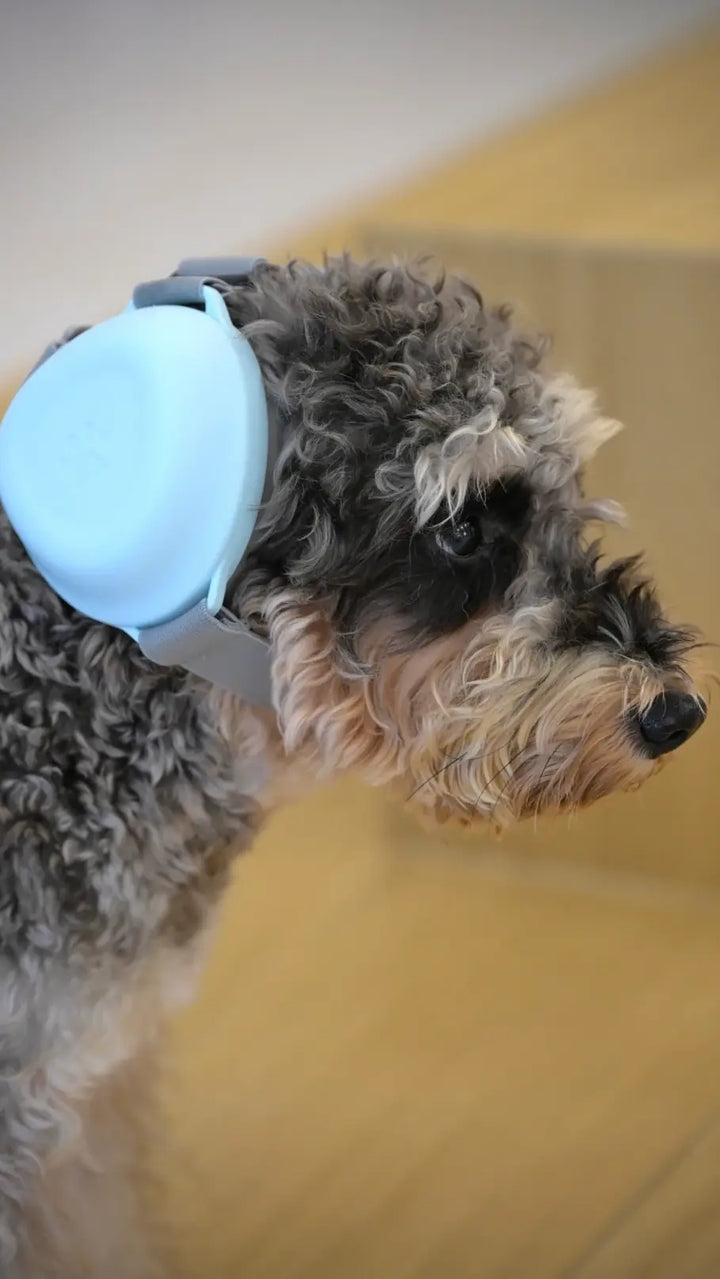
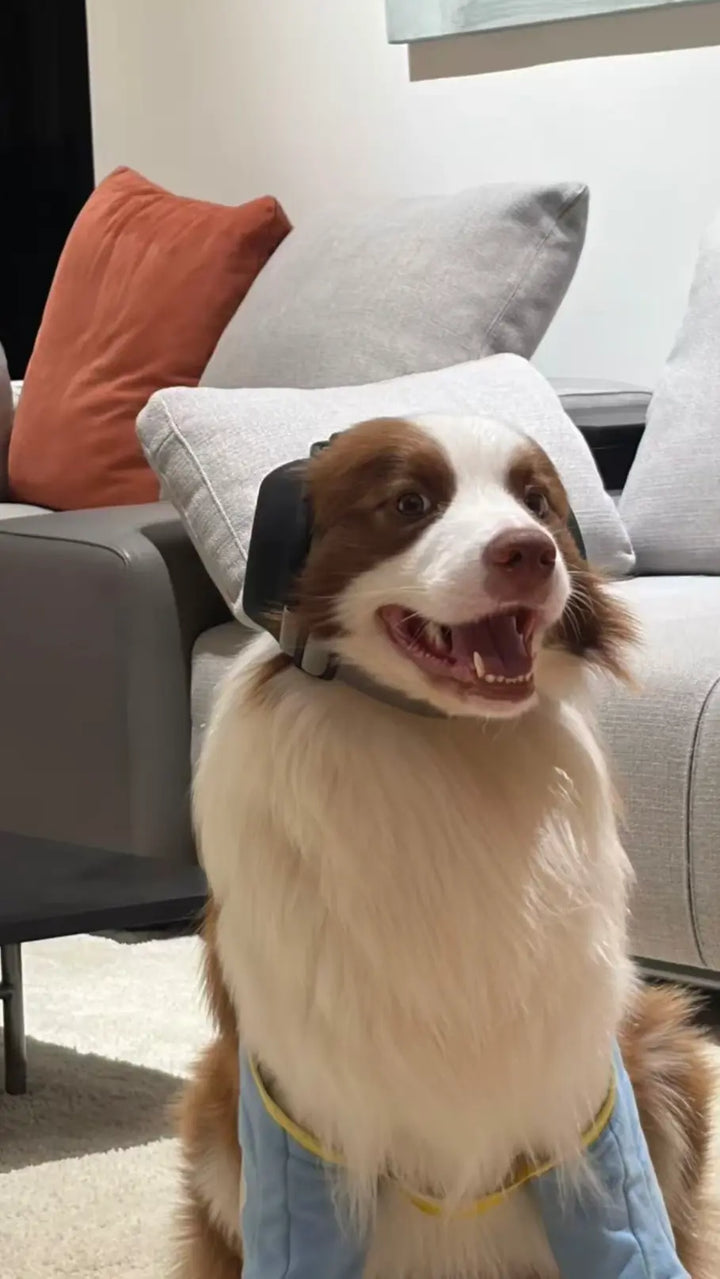
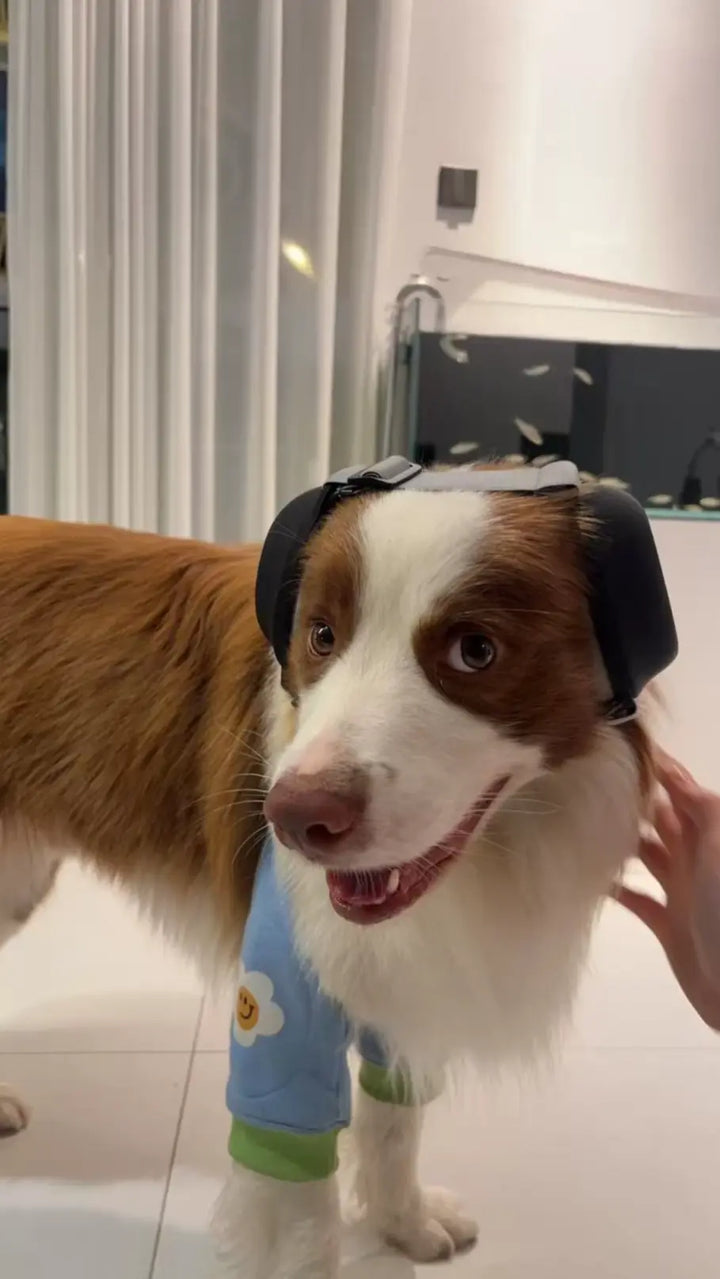
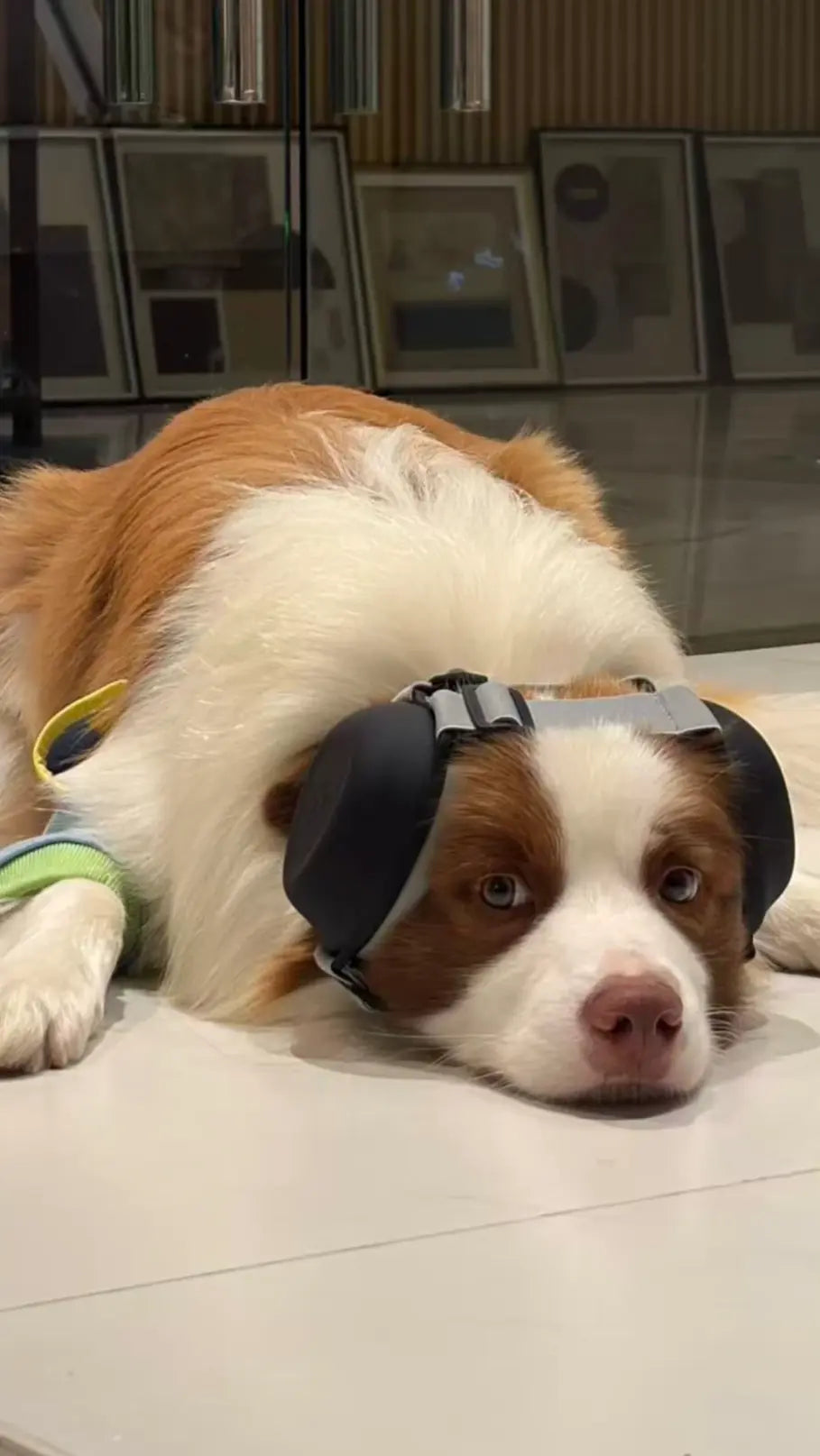
Ear protection is one layer in your storm plan, alongside the safe space, background sound, your company and your vet's advice. The AKC notes that well-fitted, noise-reducing ear muffs can offer some protection and work best with behavior training. PAWSHHH is passive hearing protection with a lab-rated SNR 29 dB* and a 3-point fit designed to help keep the cups in place, with no batteries to run flat in a power cut. Follow the fitting steps and practice before the season starts.
Not veterinary advice. Talk to your vet about severe anxiety.
*Manufacturer lab rating. Real-world reduction varies with fit, head shape and coat.