Everyday noise4 min readNov 6, 2026
Vacuums, Blow-Dryers and Smoke Alarms: The Everyday Noises That Stress Dogs

It's not just fireworks and thunder. Researchers report that ordinary household noises can also cause fear and anxiety in dogs (Frontiers in Veterinary Science, 2021). Vacuums, blow-dryers, smoke alarms, blenders and power tools are common culprits. The good news is that everyday noises are often the easiest to work on, because you control when they happen. A little distance, a lot of treats and some patience go a long way.
Which everyday noises bother dogs most?
Every dog is different, but owners often mention:
- Vacuum cleaners and robot vacuums: loud, moving and unpredictable
- Hair dryers and grooming dryers: loud and aimed close to the head
- Smoke and carbon monoxide alarms: high-pitched and piercing, including low-battery chirps
- Kitchen appliances like blenders and food processors
- Power tools, lawn mowers and leaf blowers
- Dropped pans, slammed doors and the doorbell
Why can ordinary noises be so stressful?
Dogs hear a wider range than we do, roughly 67 Hz to 45 kHz compared with about 64 Hz to 23 kHz for people (LSU). Many machines make high-pitched sounds we barely notice. A beep that seems faint to you can sound much harsher to your dog.
Context matters too. A vacuum is loud, moves toward the dog, seems to chase them, and then stops for no clear reason. A smoke alarm gives no warning and doesn't stop when the dog runs away. Things that are loud and unpredictable, with no way for the dog to control them, are the hardest.
Some dogs are simply more sensitive than others. Noise sensitivity was the most common anxiety trait in a University of Helsinki study of about 13,700 pet dogs (Salonen et al., 2020).
How do I know if a household noise is stressing my dog?
Look for: leaving the room when the noise starts, hiding, trembling, lip-licking, yawning when not tired, ears pinned back, tail tucked, panting, barking or lunging at the machine, or being clingy and unsettled afterwards. If your dog always disappears when you get the vacuum out, that's a sign.
How can I make the vacuum less scary?
Use the same gentle approach trainers use for any fear: start where your dog is comfortable and build up slowly.
- Vacuum off, in view. Leave it in a room, switched off. Toss treats near it (not too close) and let your dog investigate in their own time.
- On, far away. Have someone run it in a distant room while you give your dog treats or a chew. Stop before your dog gets uneasy.
- Closer, gradually. Over several sessions, run it a little closer, still pairing the sound with good things.
- Movement last. Only when your dog is relaxed with the sound, add slow movement, away from the dog rather than toward them.
On days you just need to clean, give your dog a chew in another room with the door closed. Avoid flooding: making a scared dog sit next to a running vacuum usually makes things worse.

What about blow-dryers and grooming?
Dryers are hard because they are loud and close to the head, with air blowing on the body. Try a towel-dry first, use the lowest heat and speed setting, keep the nozzle away from the face and ears, and take breaks. Work up to it with the same step-by-step approach: dryer off, dryer on across the room, then closer.
If your dog goes to a groomer, ask about quieter options and tell them your dog is sensitive. Some groomers are happy to work with a dog who wears ear protection, as long as the dog is used to it.
What should I do about smoke alarms?
Never remove or disable smoke or carbon monoxide alarms. They protect your whole household. Instead:
- Test alarms when your dog is out on a walk with someone else, or in a far room with a chew and the door closed.
- Replace batteries on a schedule so you're not surprised by low-battery chirps, which some dogs find very distressing.
- Use a fan or extractor hood when cooking to cut down on false alarms.
How can I make my home calmer for a sound-sensitive dog?
Small changes to the house can lower the background stress level, which makes sudden noises easier to cope with:
- Give your dog a quiet base. Put their bed in a low-traffic spot, away from the front door, the washing machine and the kitchen.
- Soften the room. Rugs, curtains and soft furnishings absorb sound and reduce echo.
- Use steady sound. A fan or soft music can mask sudden noises like the doorbell or traffic.
- Keep a routine. Predictable walks, meals and rest times help sensitive dogs feel secure.
- Schedule noisy chores. Run the vacuum or blender right after a walk, when your dog is tired and more relaxed, or while they're out.
Should my dog wear ear protection at home?
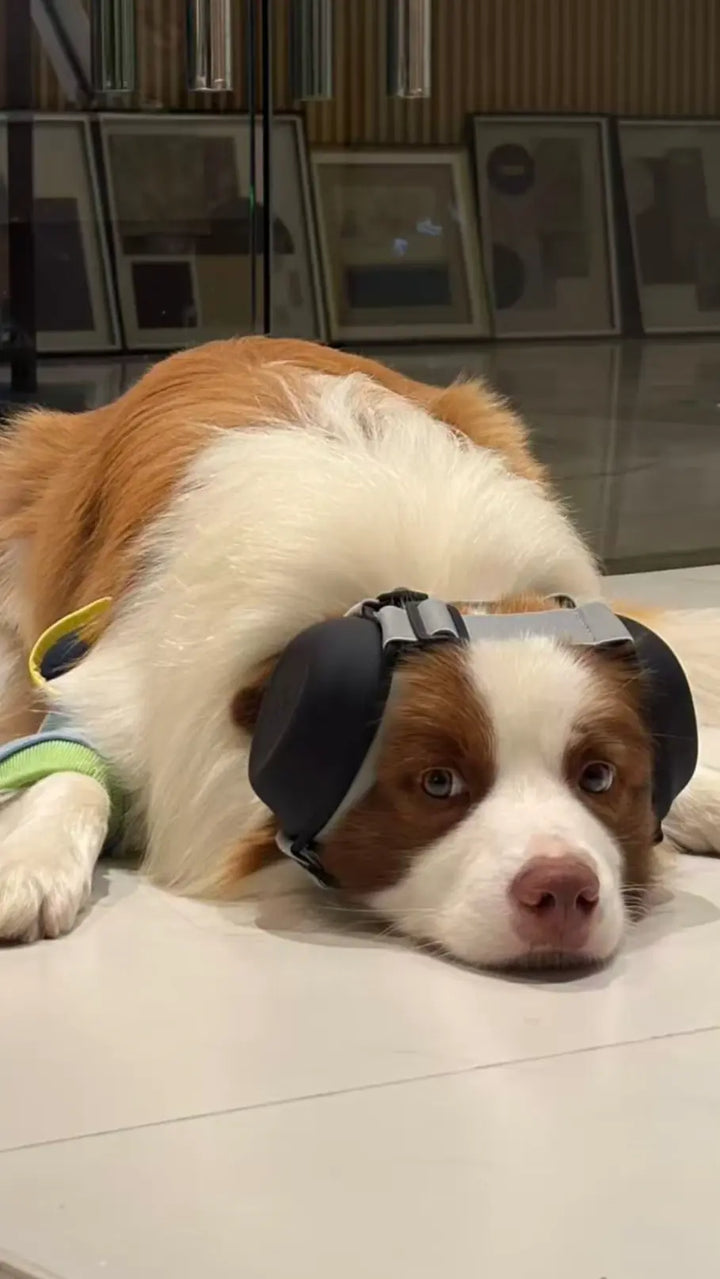
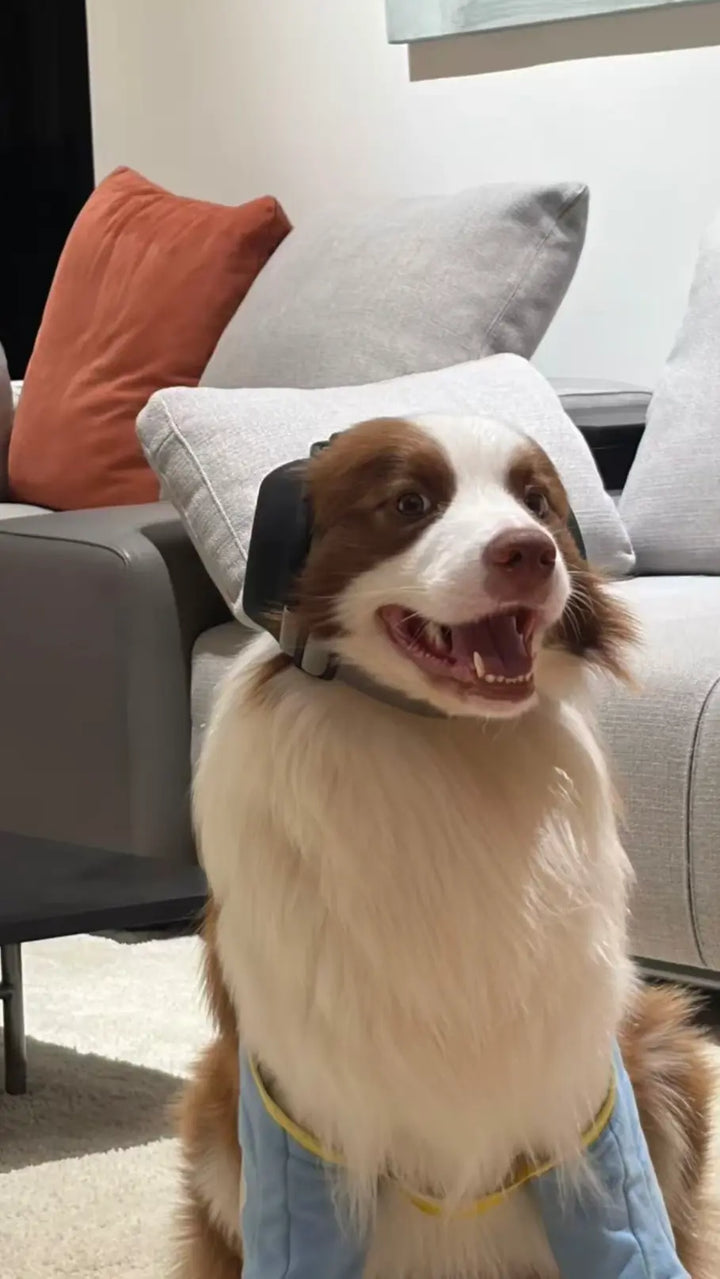
For planned, noisy jobs (a renovation next door, a day of power tools, a grooming session) ear protection can help some dogs, as long as they are already comfortable wearing it and you are there to supervise. The AKC notes that well-fitted, noise-reducing ear muffs can offer some protection and work best with behavior training.
PAWSHHH is passive hearing protection with a lab-rated SNR 29 dB* and a 3-point fit designed to help keep the cups in place. Start with the size guide and our training guide. For everyday noises you control, though, training and distance usually do the heavy lifting.
When should I talk to my vet?
If your dog's reaction to household noise is getting worse, stops them from eating or resting, or spreads to more and more sounds, talk to your vet. Noise sensitivity is common, and your vet can help you build a plan that fits your dog.
For the research behind noise fear, see our Hearing Science page.
Not veterinary advice. Talk to your vet about severe anxiety.
*Manufacturer lab rating. Real-world reduction varies with fit, head shape and coat.